

Bernedoodle Size: What Are the Different Sizes and Weights?
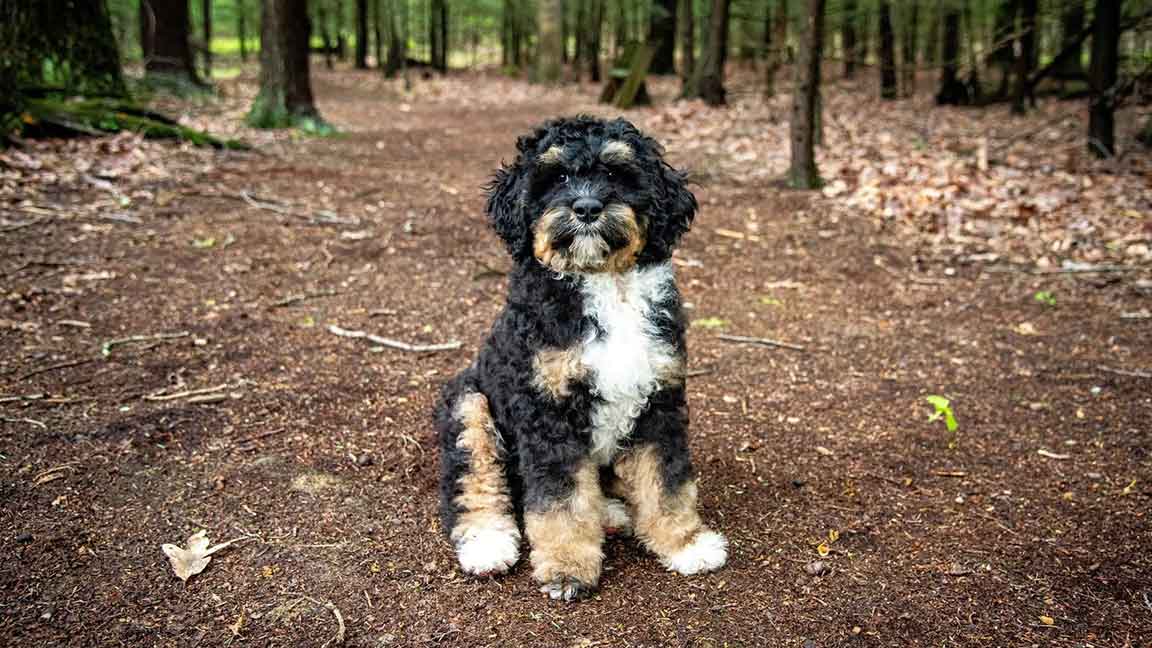
Bernedoodles come in four main sizes: tiny (micro), mini, medium, and standard. Tiny Bernedoodles weigh between 10 and 24 pounds, minis between 25 and 35 pounds, mediums between 36 and 50 pounds, and standards between 51 and 90 pounds. Because Bernedoodles are a cross between a Bernese Mountain Dog and a Poodle, their size depends primarily on which type of Poodle was used in the breeding. In deeper generations, both parents are Bernedoodles, but ancestors’ sizes still impact the offsprings’ sizes. At Fox Creek Farm, we raise both Goldendoodles and Bernedoodles, and get asked about size more than almost any other topic, so we put this guide together to give you everything you need in one place.
When choosing a Bernedoodle, one of the most important considerations is size. The breed comes in a variety of sizes, each with its own set of unique traits, making it easier for potential dog owners to find the perfect fit for their lifestyle. Whether you live in a small apartment or have a large yard, there’s a Bernedoodle size that will suit your home and family.
Understanding the Bernedoodle Breed
Before diving into the specifics of Bernedoodle sizes, it’s important to understand the breed as a whole. Bernedoodles are known for their loyalty, intelligence, and friendly demeanor, which makes them ideal companions for families, singles, and seniors alike.
What is a Bernedoodle?
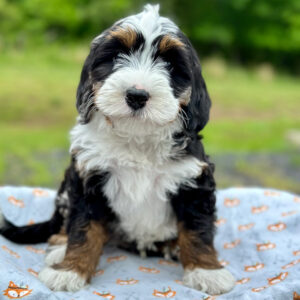
A Bernedoodle is a hybrid breed that results from crossing a Bernese Mountain Dog with a Poodle in the first generation. Both of these parent breeds bring unique traits to the table, resulting in a dog that combines the best of both worlds:
- Bernese Mountain Dog Traits: These dogs are known for their calm, friendly, and affectionate nature. As large, sturdy dogs with strong work ethics, they were originally bred as farm dogs in Switzerland. Bernese Mountain Dogs are also incredibly loyal, often forming strong bonds with their families.
- Poodle Traits: Poodles, on the other hand, are celebrated for their intelligence, hypoallergenic coats, and playful personalities. Poodles come in three main sizes: Toy, Miniature, and Standard, and these sizes often reflect the size variations seen in Bernedoodles.
By combining these two breeds, Bernedoodles inherit the Bernese Mountain Dog’s gentle and affectionate nature, along with the Poodle’s intelligence and low-shedding coat. This makes them wonderful companions for many households.
General Characteristics of Bernedoodles
Bernedoodles can vary in appearance, depending on which parent breed they take after more. However, some characteristics are generally consistent across all Bernedoodles:
- Temperament: Bernedoodles are typically calm, social, and loving. They tend to bond deeply with their families and are known for being great with children and other pets.
- Trainability: Thanks to their Poodle heritage, Bernedoodles are highly trainable and often excel in obedience training and other activities that require focus and intelligence.
- Coat Type: One of the standout features of the Bernedoodle is their low-shedding coat, which can range from straight to wavy to curly. This trait makes them a good option for individuals or families with allergies. However, their coat will require regular grooming to prevent matting.
- Lifespan: The average lifespan of a Bernedoodle is 12-15 years, though this can vary with size (smaller Bernedoodles tend to live longer than larger ones).
Bernedoodles are also known for their adaptability. They can thrive in a variety of living situations, from spacious country homes to smaller urban apartments, as long as they receive the love, attention, and exercise they need.
Why Bernedoodle Size Matters
One of the defining features of the Bernedoodle breed is its size variation. Because Bernedoodles can be bred with Toy, Miniature, or Standard Poodles, their sizes can range significantly. Understanding these size differences is crucial when deciding which Bernedoodle is the right fit for you.
Here are a few reasons why size matters when choosing a Bernedoodle:
- Living Space: If you live in a smaller home or apartment, a Petite or Mini Bernedoodle might be a better fit. Larger Bernedoodles, such as the Standard variety, need more space to move around comfortably.
- Exercise Needs: Larger Bernedoodles typically require more exercise and space to roam, while smaller Bernedoodles can thrive with moderate daily exercise.
- Family Composition: If you have young children or elderly family members, you might want to consider a smaller Bernedoodle, as they are easier to handle and less likely to knock over smaller individuals accidentally.
Understanding these general characteristics will help guide you as you explore the different size categories of Bernedoodles, which we’ll delve into in the next section.
With this foundational understanding of the Bernedoodle breed, we can now explore the four main size categories: petite, mini, medium, and standard Bernedoodles. Each size offers unique traits that cater to different living environments and family dynamics. Let’s break down the specifics in the next section.
The Different Bernedoodle Sizes
Bernedoodles come in four primary size categories: petite, mini, medium, and standard. These sizes are determined primarily by the type of Poodle used in the breeding process, as the Bernese Mountain Dog remains a constant. Let’s break down each size to give you a better understanding of what to expect.
Tiny (Micro) Bernedoodle Size
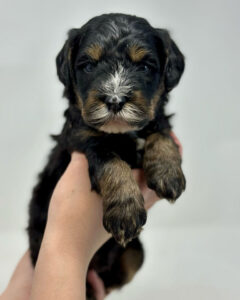
Petite Bernedoodles are the smallest of the breed. These dogs are typically bred using a Toy Poodle, resulting in a mid-sized version of the Bernedoodle. Then it takes several more generations of downsizing, selecting smaller offspring to breed with other smaller Poodles or Bernedoodles, to create a true petite Bernedoodle. Despite their smaller stature, petite Bernedoodles inherit the same lovable characteristics that make this breed so popular. They tend to be highly affectionate, intelligent, and adaptable.
Petite Bernedoodles usually weigh between 10 and 24 pounds and stand under 14 inches at the shoulder. Because of their compact size, they are an excellent choice for individuals or families living in apartments or smaller homes. Additionally, their smaller size makes them easier to handle, which is particularly appealing for elderly owners or those with young children.
One thing to keep in mind about petite Bernedoodles is that, due to their size, they may have slightly different exercise needs than their larger counterparts. While they enjoy playtime and daily walks, they don’t require as much vigorous activity as the standard Bernedoodle. This makes them ideal for people with more moderate activity levels, though they still need mental stimulation to keep their minds sharp.
Mini Bernedoodle Size
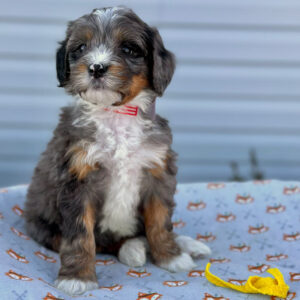
Mini Bernedoodles represent the lower middle ground in terms of size, offering a nice balance for those who want a dog that is neither too small nor too large. These adorable dogs are typically created by breeding a Bernese Mountain Dog with a toy or miniature Poodle, then downsizing again, just as a petite Bernedoodle is created. As a result, they weigh between 25 and 35 pounds and stand between 14 and 17 inches at the shoulder.
This Bernedoodle size is perfect for active individuals or families with a bit more space to accommodate a larger dog. They are energetic and playful, and they love being part of the family’s daily activities. Whether it’s a weekend hike or a game of fetch in the backyard, Mini Bernedoodles thrive in environments where they can stay active and engaged.
While they may require more exercise than Tiny Bernedoodles, Mini Bernedoodles are still relatively low-maintenance compared to larger breeds. A daily walk, some playtime, and consistent training will usually be enough to keep them happy and healthy. They are also known for being highly social dogs that love spending time with their human companions, making them an excellent choice for families with children.
Medium Bernedoodle Size
Medium Bernedoodles are the next size category of the breed, making them smaller than their Bernese Mountain Dog ancestor. Bred with a mini Poodle, these dogs typically weigh between 36 and 50 pounds and stand anywhere from 18 to 21 inches tall. Medium Bernedoodles require a little more space and can thrive in apartment living only when their owners actively take them for walks and playtime each day.
They do love hiking and outdoor activities, and playing fetch with their humans can provide the physical activity they need to stay happy and healthy. Providing mental stimulation games is a great way to entertain them when physical activity is limited due to space or weather.
Standard Bernedoodle Size
Standard Bernedoodles are the largest of the breed, often resembling their Bernese Mountain Dog parent more closely in terms of size. Bred with a Standard Poodle, they typically weigh between 51 and 90 pounds and stand anywhere from 23 to 29 inches tall. Due to their size, standard Bernedoodles require more space and are best suited for homes with larger yards or open spaces where they can move around freely.
Despite their size, Standard Bernedoodles are known for their gentle and affectionate nature. They are often referred to as “gentle giants,” as they tend to be calm and patient, especially with children. Their larger size also gives them a certain majesty, and they make excellent family dogs for those with enough room to accommodate them.
However, it’s important to note that standard Bernedoodles have higher energy levels and require more exercise than their smaller counterparts. Daily walks, playtime, and mental stimulation are essential to keep them happy. Additionally, because of their size, they may not be the best fit for those living in apartments or small homes. They need space to roam, and without proper exercise, they may become bored or restless.
Bernedoodle Size Chart at a Glance
If you want a quick side-by-side comparison before diving into the details, here is a summary of all four Bernedoodle sizes:

Keep in mind that genetics can create some variation within each category, even within the same litter. If size is a priority for your family, talk to your breeder about the parent dogs and their weights, which gives the most reliable prediction of where your puppy will land.
Factors Influencing Bernedoodle Size
Several factors can influence the size of a Bernedoodle, and it’s important to understand these variables when considering which size category to choose.
Genetics can be unpredictable, and even within a litter, there may be variations in size based on which parent the puppy takes after more. Some Bernedoodles may grow larger or smaller than expected, depending on their genetic makeup.
Genetics and Parent Breeds
The primary determinant of a Bernedoodle’s size is the Poodle used in the breeding process, or in the case of a multigenerational Bernedoodle, the size of its Bernadoodle parents. Bernese Mountain Dogs are large, averaging between 70 and 115 pounds, so the size variation in Bernedoodles comes from the Poodle parent. The three Poodle sizes (toy, miniature, and standard) correspond to the petite, mini, medium, and standard Bernedoodle categories, respectively.
Generation Types (F1, F1b, F2)
The generation of the Bernedoodle also plays a role in determining size. For example, an F1 Bernedoodle is a first-generation cross between a Bernese Mountain Dog and a Poodle. At the same time, an F1b Bernedoodle is a backcross, meaning it’s a cross between an F1 Bernedoodle and a Poodle. This backcross can influence size, as the additional Poodle genetics may lead to a slightly smaller dog.
Multigen Bernedoodles, which result from breeding two Bernedoodles, may exhibit greater size variation, depending on how the genetics play out. If size is a critical factor in your decision, understanding these generation types can help you predict the likely outcome.
Nutrition and Health
Nutrition plays a crucial role in a Bernedoodle’s growth and development. Proper feeding practices, including portion control and high-quality dog food, can help ensure your Bernedoodle reaches its full potential without becoming overweight or undernourished. Additionally, regular veterinary check-ups and a well-balanced diet tailored to the dog’s size and activity level are essential to maintaining optimal health.
Growth Milestones and Benerdoodle Size Expectations
Understanding how your Bernedoodle will grow over time can help you plan for their care and ensure they reach their full potential. Each size category has different growth patterns, but there are some general milestones to be aware of.
Growth Charts
Bernedoodles, like many dog breeds, experience rapid growth in their first year of life. For petite Bernedoodles, the majority of their growth will occur within the first six months. Mini Bernedoodles tend to grow steadily over the first year, while medium and standard Bernedoodles can take up to two years to mature fully.
It’s important to monitor your Bernedoodle’s growth and compare it to breed-specific growth charts, which can provide a general idea of how much weight they should gain each month. Consistent growth, without excessive weight gain, is usually a good sign of a healthy Bernedoodle.
When Do Bernedoodles Stop Growing?
Petite Bernedoodles typically reach their full size by 10 to 12 months, while mini and medium Bernedoodles continue growing until around 12 to 18 months. Standard Bernedoodles take the longest to reach maturity, often continuing to grow until they are 18 to 24 months old. After this point, most of their growth will be in muscle development and filling out rather than height.
Choosing the Right Bernedoodle Size for Your Lifestyle
Now that you have a better understanding of the different Bernedoodle sizes, it’s time to consider which size will best suit your lifestyle.
Space Considerations
If you live in an apartment or a smaller home, a petite or mini Bernedoodle may be the best option. Their smaller size means they don’t need as much room to move around, and they tend to adapt well to limited space. Standard Bernedoodles, on the other hand, require more space to stretch out and roam. If you have a larger yard or live in a house with plenty of room, a standard Bernedoodle may be a good fit.
Activity Levels
While all Bernedoodles enjoy daily exercise, larger Bernedoodles generally require more physical activity. If you lead an active lifestyle and enjoy long walks, hikes, or outdoor activities, a standard or medium Bernedoodle would likely fit right into your routine. However, if you prefer a more laid-back lifestyle or have limited time for exercise, a petite or mini Bernedoodle may be a better match.
Family Dynamics
Your family’s composition is another important factor to consider when choosing the right size Bernedoodle. If you have young children or elderly family members, a smaller Bernedoodle might be easier to handle and less likely to cause accidental injury. Standard Bernedoodles, while gentle, can be strong and boisterous, making them a better fit for families with older children or those who are comfortable with larger dogs.
Caring for Your Bernedoodle Based on Size
The size of your Bernedoodle will also impact how you care for them. While the breed shares common traits across all sizes, specific care considerations depend on whether you have a petite, mini, medium, or standard Bernedoodle.
Dietary Needs
Diet plays a crucial role in keeping your Bernedoodle healthy, and each size category has its own specific needs. Petite Bernedoodles, due to their smaller frames, require fewer calories compared to their larger counterparts. However, it’s important to ensure they receive nutrient-rich food to support their high energy levels.
Mini and medium Bernedoodles, being mid-sized, will need a balanced diet that includes proteins, fats, and carbohydrates to support their growth and energy needs. They tend to have higher metabolisms than standard Bernedoodles, so feeding them small, frequent meals is often a good strategy.
For standard Bernedoodles, their larger size means they require more calories to maintain their energy and muscle mass. It’s essential to feed them high-quality, well-portioned meals to avoid overfeeding, which could lead to obesity—a common issue in larger dogs. Additionally, joint supplements should be a consideration for medium and standard Bernedoodles to support their joints as they age.
Exercise Requirements
While all Bernedoodles are active dogs that enjoy play and exercise, their specific exercise needs vary with size. Petite Bernedoodles, due to their smaller stature, have lower exercise requirements. A couple of short walks a day, combined with some indoor playtime, usually keeps them happy and healthy.
Mini and medium Bernedoodles are more energetic and require a bit more activity. A daily walk, combined with a couple of play sessions, is usually enough to meet their exercise needs. These dogs enjoy a variety of activities, including fetch, running, and agility games.
Standard Bernedoodles, being the largest and most active of the breed, need more vigorous exercise to keep them physically and mentally stimulated. Daily long walks, hikes, and even running or swimming are great activities to engage their large bodies and sharp minds. Without enough exercise, they can become bored and may develop destructive behaviors as a result.
Grooming and Maintenance
Bernedoodles are known for their beautiful, hypoallergenic coats, but they require specific grooming. All sizes of Bernedoodles will have straight, wavy, or curly coats that shed less, making them suitable for people with allergies. However, regular grooming is essential to prevent matting. Their coats should be brushed a few times a week and trimmed every few months.
Standard Bernedoodles, especially those with curlier coats, may require more frequent grooming simply due to their size. They need to be brushed regularly to prevent tangling, and professional grooming every six to eight weeks is recommended. Additionally, all Bernedoodle sizes will benefit from routine ear cleaning, nail trimming, and dental care.
Why Choose Fox Creek Farm for any Goldendoodle and Bernedoodle Size
At Fox Creek Farm, we understand that every family has unique needs, and that’s why we offer Bernedoodles that are raised with love and passion for Bernedoodles. Our dedication to ethical breeding practices means that our puppies are healthy, well-socialized, and ready to become beloved members of your family.
Our Commitment to Quality
At Fox Creek Farm, we have spent years carefully selecting parent dogs across all size categories to ensure predictable, healthy outcomes for our families. Every breeding dog in our program is health tested, and we are transparent about parent weights so you know what to expect before your puppy even arrives. We have placed tiny, mini, medium, and standard Bernedoodles in homes across the country, and we stay in touch with those families long after pickup day. That real-world experience across hundreds of litters is what allows us to guide you confidently toward the right size for your home, your family, and your lifestyle.
For more information about Fox Creek Farm, watch this video.
Choosing the right Bernedoodle Size
Choosing the right Bernedoodle size is an important decision, as it will impact your dog’s care needs, exercise requirements, and how they fit into your home and lifestyle. Whether you’re drawn to the tiny and charming petite Bernedoodle, the energetic and adaptable mini or medium Bernedoodle, or the large and loving Standard Bernedoodle, each size offers its own unique set of advantages.
Understanding the differences in size, from weight and height to exercise needs and grooming requirements, is key to ensuring you find a companion that suits your daily life. With careful consideration of your living space, family composition, and activity levels, you’ll be able to choose a Bernedoodle that will thrive in your home.
At Fox Creek Farm, we’re here to help guide you through the process of choosing the perfect Bernedoodle. Our commitment to quality, health, and ethical breeding practices ensures that your new family member will be healthy, happy, and well-suited to your lifestyle. Whether you’re ready to bring home a petite, mini, medium, or standard Bernedoodle, we’re excited to help you find your ideal companion.

Frequently Asked Questions
What are the different sizes of Bernedoodles?
Bernedoodles come in four sizes: tiny (micro), mini, medium, and standard, ranging from 10 pounds up to 90 pounds depending on the Poodle parent used in breeding.
What is the most popular Bernedoodle size?
Mini Bernedoodles are consistently the most popular size because they offer a manageable weight, moderate exercise needs, and fit comfortably in a wide range of homes.
How big will my Bernedoodle get?
The best predictor is the weight of both parent dogs. Ask your breeder for parent weights, and look at the Poodle parents’ size category since that determines which size range your puppy falls into.
Do smaller Bernedoodles live longer?
Yes. Smaller Bernedoodles, like the tiny and mini, tend to live 14 to 15 years, while standard Bernedoodles average closer to 12 years, which is consistent with the general pattern in dogs where smaller size correlates with longer lifespan.
At what age is a Bernedoodle fully grown?
Tiny Bernedoodles reach full size by 10 to 12 months. Minis and mediums finish growing around 12 to 18 months. Standards can continue to grow for 18 to 24 months.