Dog Body Language: How to Read What Your Pup’s Tail Is Saying
Dogs speak volumes without saying a word. One wag of the tail, a subtle shift of posture, or a relaxed stance can tell you exactly how your dog feels. Understanding dog body language helps you build a stronger relationship with your pup while also preventing misunderstandings between dogs and people.
At Fox Creek Farm, we spend countless hours observing our Goldendoodles and Bernedoodles as they grow and interact with people, other dogs, and new environments. Over the years, one thing has become clear very quickly: the tail is one of the most expressive parts of a dog’s communication system.
Many people assume that a wagging tail always means happiness. In reality, it is a little more complicated than that. A dog’s tail can signal excitement, nervousness, curiosity, confidence, or even discomfort, depending on how it moves and where it sits.
Learning to read dog body language can make you a better dog owner and help you respond appropriately to what your pup is feeling.
Why Dog Body Language Matters
Dogs rely heavily on body signals rather than vocal communication. While barking or whining might grab your attention, most of their messages are conveyed through posture, facial expressions, and tail movements.
Understanding dog body language helps you:
- Recognize when your dog feels relaxed and happy
- Notice early signs of stress or anxiety
- Prevent uncomfortable interactions between dogs
- Support better training and communication
- Build deeper trust with your dog
At Fox Creek Farm, we encourage families to start observing these signals early, especially during puppyhood. Puppies are constantly learning how to communicate, and owners who understand these signals can guide them toward confident, well-adjusted behavior.
The Basics of Tail Communication
Before diving into specific tail movements, it helps to understand one important detail: the position of a dog’s tail naturally varies by breed.
For example, a Bernedoodle’s fluffy tail may sit in a slightly curved position, while other breeds naturally carry their tails lower or higher. Because of this, the key to understanding dog body language is comparing your dog’s tail position to their normal resting posture.
Once you know what “neutral” looks like for your dog, changes become much easier to read.
The Happy Wag
This is the tail signal most people recognize.
A relaxed wag usually looks loose and rhythmic, with the tail moving in wide arcs. Often, the dog’s entire back end wiggles along with it.
You will typically see this type of wag when:
- You arrive home
- Your dog greets familiar people
- Playtime begins
- A favorite toy appears
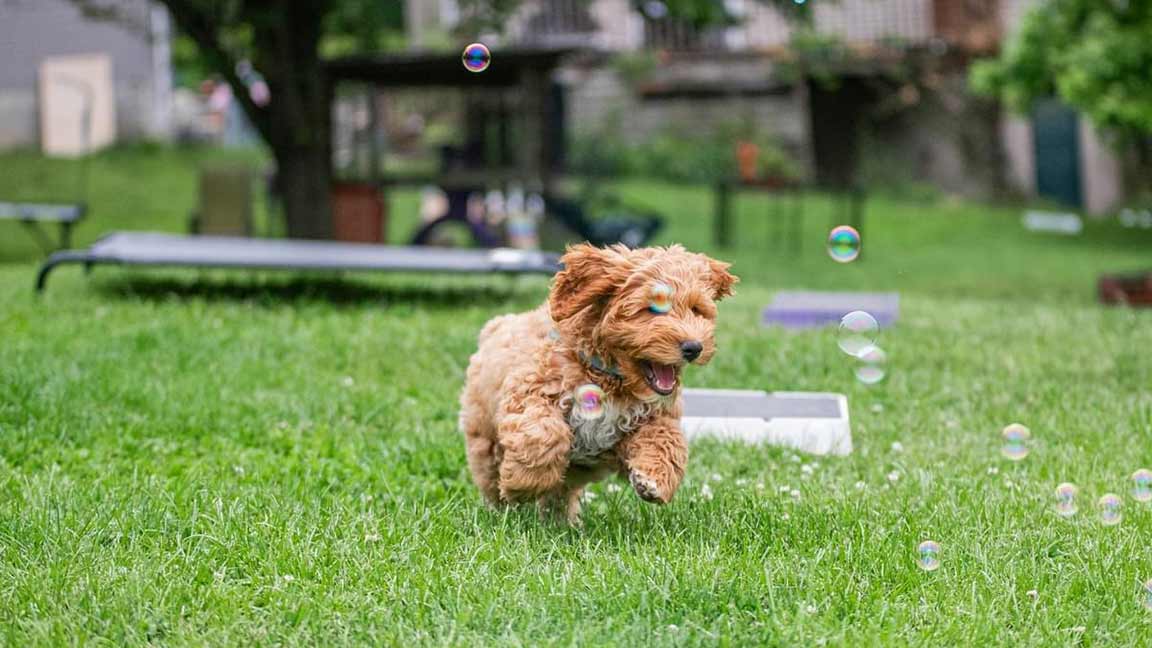
At Fox Creek Farm, when our puppies see someone approaching the play yard, you can spot the happy wag instantly. The tail moves freely, and the whole puppy seems to bounce with excitement.
This type of wag is one of the clearest positive signals in dog body language.

The Curious Tail
When a dog notices something interesting, the tail often lifts slightly and moves slowly from side to side.
This movement usually means the dog is alert and curious rather than excited. You might see it when your dog hears a strange sound or spots something new in the environment.
Other body signals often accompany this tail movement:
- Ears forward
- Head slightly tilted
- Focused eye contact
Curiosity is a healthy part of canine behavior, and many intelligent breeds like Goldendoodles show it frequently.
The Slow Wag
A slower, more cautious wag can signal uncertainty.
In dog body language, a slow wag sometimes appears when a dog is assessing a situation. The dog may not be fully comfortable yet, but is still trying to gather information.
You may notice this when:
- Meeting a new person
- Encountering a new dog
- Exploring an unfamiliar environment
If the rest of the body appears relaxed, the dog is likely just curious. However, if the dog seems tense, the slow wag may signal caution.
The High, Stiff Tail
A tail raised high and moving stiffly conveys a very different message.
In dog body language, this often indicates heightened alertness or tension. The dog may feel challenged, defensive, or overly stimulated.
Signs that often appear alongside this tail posture include:
- Stiff body posture
- Direct staring
- Raised hackles
- Reduced movement
When you see this posture, it is usually a good idea to create space and redirect the dog’s attention.
This is especially important when introducing dogs to one another.

The Low or Tucked Tail
A lowered or tucked tail is one of the clearest signals of discomfort or fear.
Dogs may tuck their tails when they feel:
- Scared
- Overwhelmed
- Submissive
- Uncertain
In puppies, this can happen during their first encounters with new environments, loud noises, or unfamiliar people.
At Fox Creek Farm, we work hard to expose puppies to positive experiences early so that their confidence grows naturally. Early socialization plays a huge role in shaping a healthy dog’s body language.
The Helicopter Tail
Yes, this is a real thing.
Some dogs wag their tails in big circular motions that look like a helicopter blade spinning. This enthusiastic movement is usually reserved for moments of pure joy.
You will often see it when:
- Your dog greets a favorite person
- A long-awaited walk begins
- Dinner appears in the bowl
It is one of the most joyful expressions in dog body language, and if you have ever seen a Goldendoodle do it, you know exactly what we mean.
Tail Signals Are Only One Piece of the Puzzle
While tails are expressive, they are only one part of the full communication system dogs use.
To truly understand dog body language, you also need to observe:
- Ear position
- Facial expression
- Eye contact
- Body posture
- Movement speed
For example, a wagging tail combined with stiff posture and intense staring may not mean happiness. On the other hand, a relaxed wag paired with soft eyes and loose posture usually signals friendliness.
At Fox Creek Farm, we encourage families to observe their dog’s entire body rather than focusing on one signal alone.
Helping Puppies Develop Healthy Communication
Good communication between dogs and humans begins early.
Our Goldendoodle and Bernedoodle puppies grow up surrounded by daily interaction, gentle handling, and structured socialization. This helps them develop balanced dog body language and confidence as they mature.
Families can continue supporting this development at home by:
- Providing positive social experiences
- Practicing calm introductions to new people
- Rewarding relaxed, confident behavior
- Giving puppies space when they feel overwhelmed
When dogs feel understood, they become more relaxed and trusting companions.
Becoming Fluent in Dog Body Language
Learning dog body language is a bit like learning another language. At first, you may only notice the obvious signals. Over time, you begin to see the subtle ones as well.
The more you observe your dog, the better you will understand what they are trying to tell you.
And the truth is, dogs communicate with us constantly. Every wag, posture change, and playful bounce is part of an ongoing conversation.
The more fluent you become in that conversation, the stronger the bond between you and your dog will grow.
FAQ
Does a wagging tail always mean a dog is happy?
No. While a loose, relaxed wag usually signals happiness, some wagging tails indicate excitement, curiosity, or even tension. Context and overall body posture matter.
What does it mean when a dog’s tail is tucked?
A tucked tail usually indicates fear, anxiety, or submission. The dog may feel overwhelmed or uncomfortable in the situation.
Why do some dogs wag their whole body?
Many friendly breeds, including Goldendoodles and Bernedoodles, wag with their entire back end. This usually indicates excitement and positive emotion.
Can dogs control their tail movements?
Some tail movements are voluntary, while others are emotional responses. Dogs often wag naturally in response to excitement or emotional stimulation.
How can I better learn my dog’s body language?
Spend time observing your dog in different situations. Watch how their tail, ears, posture, and facial expressions change when they feel relaxed, excited, or unsure.