


How to Introduce Your Dog to a Baby
To safely introduce your dog to a baby, preparation must begin before the baby ever comes home. Structure, calm leadership, controlled first meetings, and ongoing supervision are the keys to long-term harmony. At Fox Creek Farm, we guide our families through this transition often, especially with our Goldendoodles, Bernedoodles, and mini Golden Mountain Doodle puppies who grow up to become deeply bonded family companions.
Bringing a newborn into your home changes the rhythm of daily life. Even the most stable dog notices the shift. The goal when you introduce your dog to a baby is not instant friendship. The goal is calm acceptance and gradual trust-building.
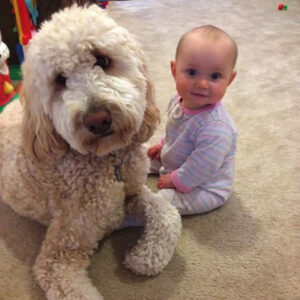
Start Preparing Before the Baby Arrives
The biggest mistake families make when they introduce their dog to a baby is waiting until the baby is already home. Dogs thrive on predictability. Sudden changes without preparation create stress.
Before delivery day:
- Adjust routines gradually
- Practice walking with a stroller
- Set up baby equipment early
- Play recordings of baby sounds at low volume
- Reinforce obedience cues like sit, down, place, and leave it
At Fox Creek Farm, we emphasize early training foundations in our breeding program because a dog with solid obedience skills transitions more smoothly into life changes.
A dog who understands boundaries is a dog who feels secure.
Refresh Basic Training
Before you introduce your dog to a baby, revisit core commands. Reliable responses to:
- Sit
- Down
- Stay
- Place
- Leave it
These commands give you tools to manage excitement or curiosity. If your dog cannot hold a calm down stay for a few minutes, that needs work before the baby comes home.
Training is not about control. It is about communication.
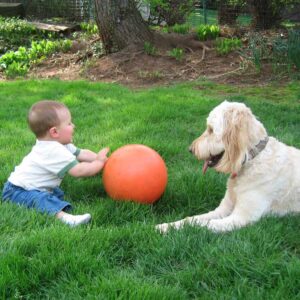
The First Introduction
When it is time to introduce your dog to a baby for the first time, structure matters.
Follow this sequence:
- Let your dog greet the returning parent first without the baby present. This releases built up excitement.
- Ensure your dog has exercised earlier that day. A tired dog makes better choices.
- Keep your dog on a leash during the first meeting.
- Stay calm. Your energy sets the tone.
Allow your dog to observe the baby from a respectful distance. If your dog shows calm curiosity, you can allow a brief, controlled sniff of the baby’s feet while you maintain leash control.
The goal when you introduce your dog to a baby is calm neutrality, not intense interest.
Read Body Language Carefully
Understanding canine body language is essential when you introduce your dog to a baby.
Watch for:
- Loose body posture
- Soft eyes
- Relaxed tail movement
Be cautious if you see:
- Stiff body posture
- Intense staring
- Lip licking or yawning under tension
- Whale eye
- Avoidance combined with stress signals
Even stable breeds like our Goldendoodles can feel overwhelmed in new situations. Respecting their communication prevents problems.
Set Clear Boundaries Early
Dogs feel safer when rules are clear.
When you introduce your dog to a baby, establish:
- No jumping near the baby
- No access to the nursery without permission
- No unsupervised interaction ever
Baby gates and designated resting areas are helpful tools. We encourage families to create a safe retreat space where their dog can decompress.
This is especially important in busy households with toddlers and older children.

Maintain Attention and Routine
One of the biggest behavioral shifts happens not during the first meeting but weeks later when exhaustion sets in, and the dog receives less attention.
To successfully introduce your dog to a baby long-term:
- Keep daily walks consistent
- Provide mental stimulation
- Schedule one-on-one interaction time
- Avoid punishing curiosity
Dogs that feel secure in their role are less likely to develop attention-seeking or anxiety-based behaviors.
As the Baby Grows
When your baby becomes mobile, supervision becomes even more critical. Crawling infants grab fur and ears. Even the gentlest dog has limits.
Teach your child as they grow:
- No pulling
- No climbing
- No disturbing a resting dog
- Gentle touch only
A healthy relationship is built from both sides.
At Fox Creek Farm, we intentionally breed for stable temperaments that thrive in family environments. However, temperament is only part of the equation. Responsible ownership completes the picture.
Why Temperament Matters
When families ask us about bringing home a puppy while planning for children, we emphasize temperament and early socialization. A well-bred Golden Mountain Doodle, Goldendoodle, or Bernedoodle with proper early neurological exposure is more adaptable to life transitions.
But no breed is babysitter-proof.
Even the most child-friendly dog must be guided, supervised, and respected.
Common Mistakes to Avoid
When you introduce your dog to a baby, avoid:
- Forcing interaction
- Allowing unsupervised access
- Punishing your dog for normal curiosity
- Ignoring stress signals
- Neglecting your dog’s exercise needs
Patience and structure prevent most problems.
Final Thoughts
To introduce your dog to a baby successfully, focus on preparation, structure, supervision, and respect for your dog’s communication. The transition does not have to be stressful. With thoughtful leadership, many dogs adjust beautifully.
If you are planning to grow your family and are considering adding a Golden Mountain Doodle, Goldendoodle, or Bernedoodle from Fox Creek Farm, we are always happy to talk through temperament, training foundations, and how to set your home up for success. A strong start creates a confident dog and a safe, peaceful household.

Frequently Asked Questions
How long does it take to introduce your dog to a baby successfully?
Every dog is different. Some adjust within days while others need several weeks of gradual exposure. Consistency and supervision are key.
Can I trust my dog alone with my baby?
No. No dog should ever be left unsupervised with a baby, regardless of breed or temperament.
What if my dog seems jealous after the baby arrives?
Increased structure, exercise, and dedicated one on one time usually resolve attention seeking behaviors. Avoid punishment and reinforce calm behavior.
Should I let my dog lick the baby?
Brief, controlled interaction is fine if your pediatrician approves, but constant licking should be discouraged. Calm boundaries matter.
Are Goldendoodles good with babies?
When responsibly bred and properly trained, Goldendoodles are typically affectionate and adaptable family companions. However, supervision and training are always required for safe interaction.