Merle Bernedoodle: Everything You Need to Know
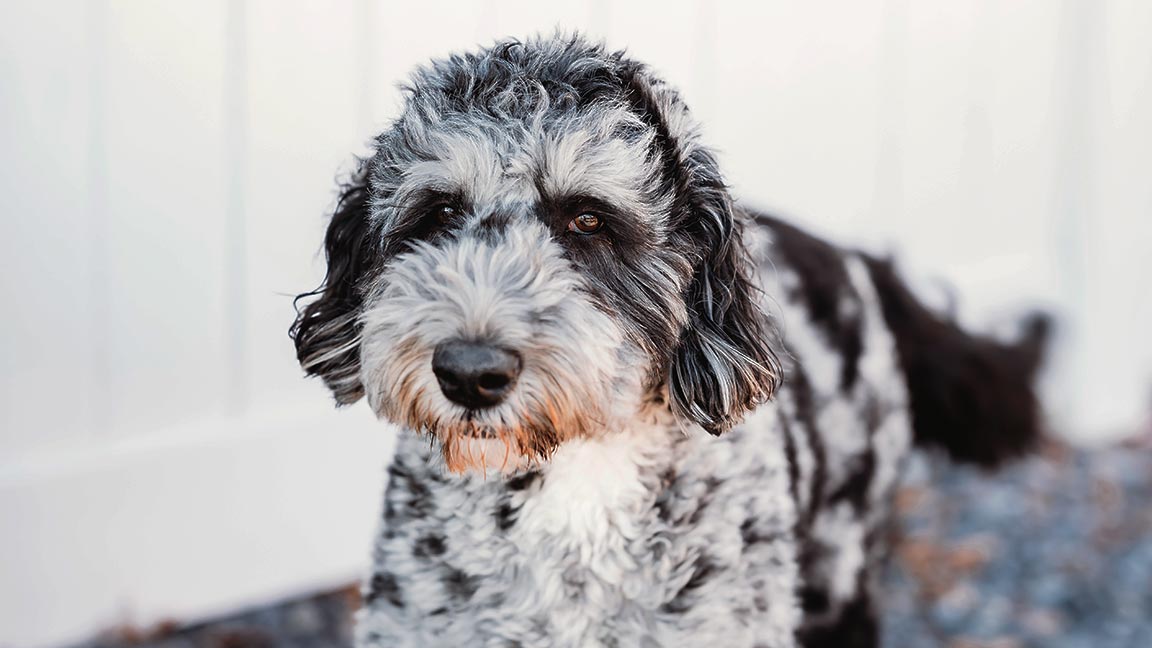
A merle Bernedoodle is a Bernedoodle, a cross between a Bernese Mountain Dog and a Poodle, that carries the merle gene, which creates a striking marbled coat with mottled patches of gray, black, white, and brown. The pattern is rare, every merle coat is one of a kind, and underneath it is the same affectionate, intelligent Bernedoodle families love.
I’m Amy Lane, founder of Fox Creek Farm and the Goldendoodle Association of North America (GANA), and I’ve been breeding doodles since 1999. Merle is one of the most requested patterns in my Bernedoodle program, and also one of the most misunderstood. In this guide I’ll cover the colors, the genetics, the health facts, and what responsible merle breeding actually requires.
What Makes a Merle Bernedoodle Different From Other Bernedoodles?
The difference is purely aesthetic. The merle gene doesn’t change personality, temperament, or trainability; it simply paints the coat in a marbled, dappled pattern that no two dogs share. Families drawn to merle Bernedoodles love pairing that show-stopping look with the breed’s signature friendly, affectionate nature. If you’re new to the breed itself, my guide to Bernedoodle sizes covers the basics; merle can appear in any size, from Mini to Standard.
Merle Bernedoodle Coat Colors
The merle gene interacts with the dog’s base color, producing an array of variations that make each merle Bernedoodle truly one of a kind.
 Blue Merle Bernedoodle
The most well-known and requested variation. Blue merle Bernedoodles blend black, gray, and white, with the darker patches taking on the bluish cast that gives them their name.
Chocolate Merle Bernedoodle
Here, the darker patches are brown rather than black, creating combinations of rich browns, lighter tans, and creamy white patches.
Phantom Merle Bernedoodle
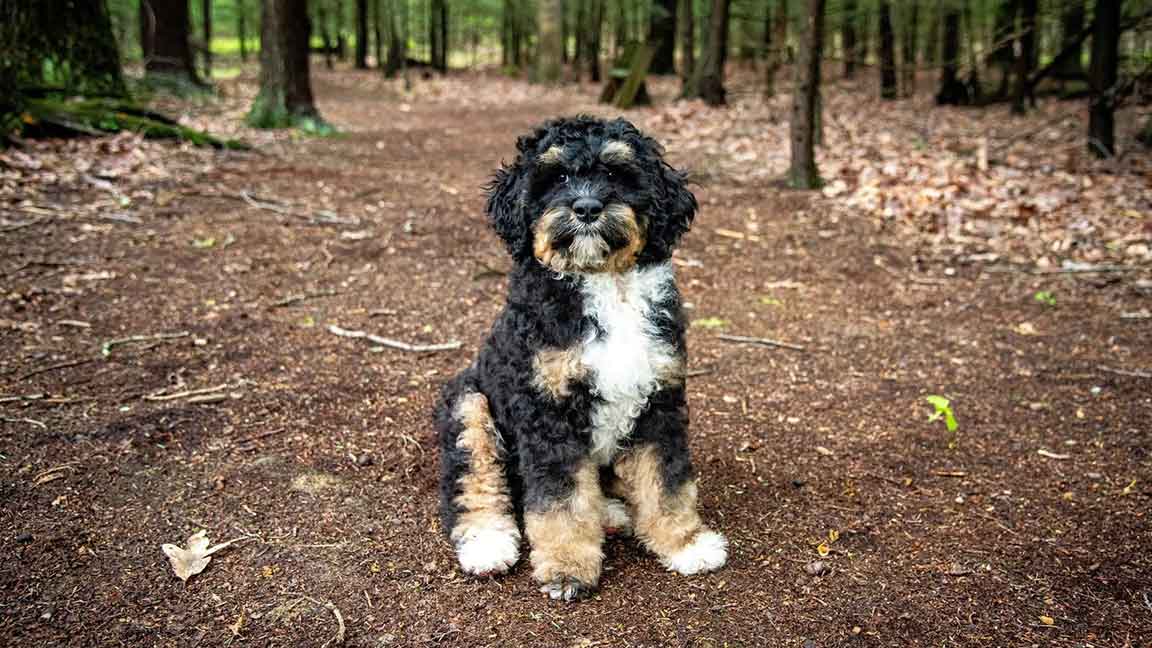
Rarer but equally beautiful, phantom merles feature distinct point markings on the face, legs, or tail layered over the merle pattern in shades of brown, cream, or white.
Eye Color Variations
One of the most intriguing traits of merle Bernedoodles is their eyes. Many are born with blue or bi-colored eyes, and some keep one brown and one blue eye into adulthood. The combination of a marbled coat and striking eyes is what makes these dogs turn heads everywhere they go.

The Genetics Behind the Merle Bernedoodle
The merle pattern comes from a single dominant gene at the M locus. Because it’s dominant, only one parent needs to carry it for merle puppies to appear in a litter, and a puppy that inherits one copy (Mm) displays the marbled pattern with no added health risk.
The danger comes from two copies. When both parents pass on the merle gene, the resulting double merle (MM) puppies face a significantly higher risk of deafness, blindness, and eye defects. The merle gene affects pigment development, and in double doses it can disrupt the development of the inner ear and eyes.
This is why merle breeding demands expertise. A dog can also carry a hidden merle gene without showing the pattern, so before any merle pairing at Fox Creek Farm, I DNA test the non-merle partner to confirm it doesn’t carry hidden merle. One copy creates the beauty. Two copies create the danger. I explain this genetics story across all doodle breeds in my merle doodle guide, if you want the deeper dive.
Health Considerations With the Merle Gene
A responsibly bred single merle Bernedoodle is just as healthy as any other Bernedoodle. The health concerns associated with merle apply almost entirely to double merles:
- Hearing problems: Partial or complete deafness from disrupted inner ear development.
- Vision problems: Underdeveloped or smaller eyes, which can progress to blindness.
- Skin sensitivity: Lighter coat areas can be more prone to sunburn and irritation, worth watching in any merle.
Every breeding dog in my program, merle or not, is health tested through PennHip and OFA for hips, elbows, heart, patellas, and eyes, plus full DNA disease panels. No merle-to-merle pairing has ever happened at Fox Creek Farm, and none ever will. That’s how the risks above stay theoretical rather than real for my families.
Temperament and Personality of the Merle Bernedoodle
Beyond the looks, merle Bernedoodles inherit the best of both parent breeds:
- From the Bernese Mountain Dog: A calm, loyal, affectionate nature, gentleness with children, and devotion to family.
- From the Poodle: High intelligence, playfulness, and an eagerness to please that makes training smooth.
Expect a playful, energetic puppy that matures into a patient, sociable companion. Each dog is an individual, but merle Bernedoodles bond quickly and deeply with their families. Early socialization matters, which is why every Fox Creek Farm puppy is raised on the Puppy Culture curriculum with early neurological stimulation, crate introduction at four weeks, and sit training by six weeks. With that foundation and positive reinforcement at home, these dogs excel in obedience, agility, and even therapy work.

Caring for a Merle Bernedoodle’s Coat
The merle coat can range from wavy to curly, depending on what your dog inherits from each parent, and texture drives the grooming routine more than the pattern does:
- Brushing: Several times a week to prevent matting, especially behind the ears and under the arms where tangles form first.
- Professional grooming: Every 6 to 8 weeks, particularly for curlier coats that grow continuously.
- Bathing: Every couple of weeks, or as needed, with a gentle dog shampoo that won’t strip natural oils.
- Eye and ear care: Blue-eyed merles can be more prone to eye discharge, so wipe gently and check for irritation. Clean floppy ears regularly to prevent infection.
One merle-specific tip: prolonged direct sun can fade the coat’s vibrant contrast over time and increases sunburn risk in lighter patches, so provide shade during long outdoor days.
Shedding and the Furnishing Gene
Bernedoodles are generally low-shedding, but the real controller is the furnishing gene. One furnishing gene greatly reduces shedding, while two furnishing genes are needed to eliminate it. Regular brushing manages any seasonal shedding, and an Omega-3 rich diet keeps the coat glossy and the merle pattern vivid.
Is the Merle Bernedoodle Hypoallergenic?
No dog is 100% hypoallergenic, but merle Bernedoodles, like all Bernedoodles, are an excellent choice for allergy-sensitive homes thanks to their Poodle heritage. Allergies are triggered by dander carried on shed hair, so a low-shedding coat releases far fewer allergens into your home.
If your allergies are more than minor, work with a breeder who can confirm through DNA testing that a puppy carries two furnishing genes. That’s standard practice in my program, and my guide to doodles and allergies explains honestly what to expect.

Why Choose a Merle Bernedoodle From Fox Creek Farm?
Because merle breeding done wrong causes real harm, the breeder matters more with this pattern than almost any other. Here’s what my families get:
- Health testing first: Full genetic screening on every breeding dog, DNA color testing before every merle pairing, and never a merle-to-merle breeding.
- Early socialization: Puppy Culture, ENS, doggy door training at four weeks, and exposure to the sights and sounds of family life from day one.
- Lifetime support: When you bring home a Fox Creek Farm puppy, I remain available with answers and guidance for the life of your dog.
Merle Bernedoodle puppies at Fox Creek Farm are $4,000, the same as every color and pattern I produce, because every puppy receives identical testing, care, and training regardless of coat.
Is a Merle Bernedoodle Right for You?
Merle Bernedoodles are adaptable dogs that fit many lifestyles, from houses with yards to apartments, as long as they get daily exercise, mental stimulation, and plenty of attention. Before you commit, be honest about three things: the grooming routine their coat requires, the daily activity they need to stay happy, and the importance of sourcing from a breeder who manages the merle gene responsibly.
If those boxes check out, you’re in for one of the most rewarding companions in the doodle world: a dog as gentle and clever as any Bernedoodle, wrapped in a coat no other dog on earth shares. When you’re ready, you can view my available puppies or join the waiting list for upcoming merle litters.
Frequently Asked Questions About Merle Bernedoodles
Are merle Bernedoodles rare?
Yes. Producing them requires a merle parent, a DNA-tested non-merle partner, and careful planning, and only some puppies in each litter inherit the pattern.
Do merle Bernedoodles have more health problems?
A responsibly bred single merle is as healthy as any Bernedoodle. Serious risks like deafness and blindness occur in double merles, which ethical breeders prevent through DNA testing.
How much does a merle Bernedoodle cost?
Expect $3,000 to $5,000 or more from breeders who test properly. At Fox Creek Farm, merle Bernedoodles are $4,000, the same as all my puppies.
What is a double merle Bernedoodle?
A double merle inherits the merle gene from both parents and faces high risks of deafness and vision defects. Responsible breeders never pair two merle carriers.
Do merle Bernedoodles’ blue eyes stay blue?
Some do. Many merle puppies are born with blue or bi-colored eyes, and a portion keep them for life while others darken as they mature.
What sizes do merle Bernedoodles come in?
The merle pattern can appear in any Bernedoodle size, from Petite and Mini through Medium and Standard. Size and pattern are inherited independently.