
The Science Behind the Zoomies: Why Dogs Suddenly Go Wild
You know the moment. Your dog is calmly sitting beside you one second, and the next, they are sprinting laps around the living room, sliding across the floor, and bouncing off the couch like a furry little tornado. Those wild, joyful bursts of energy have a name: the zoomies. They happen when a dog reaches an emotional or physical tipping point and needs to let it all out at once, and they almost always end with a happy, panting dog flopped at your feet, looking very pleased with themselves.
This guide will help you understand exactly what causes the zoomies, what is happening inside your dog’s body during one, and what over two decades of raising puppies has taught us about this wonderful little ritual.
If you have ever wondered whether something is wrong with your dog during one of these episodes, you can breathe easy. The zoomies are your dog’s way of releasing pent-up energy, expressing pure happiness, and sometimes just celebrating the fact that they are alive. At Fox Creek Farm, we have watched thousands of puppies zoom their little hearts out since 1999, and we can tell you with complete confidence that it never gets old.
What Exactly Are the Zoomies?
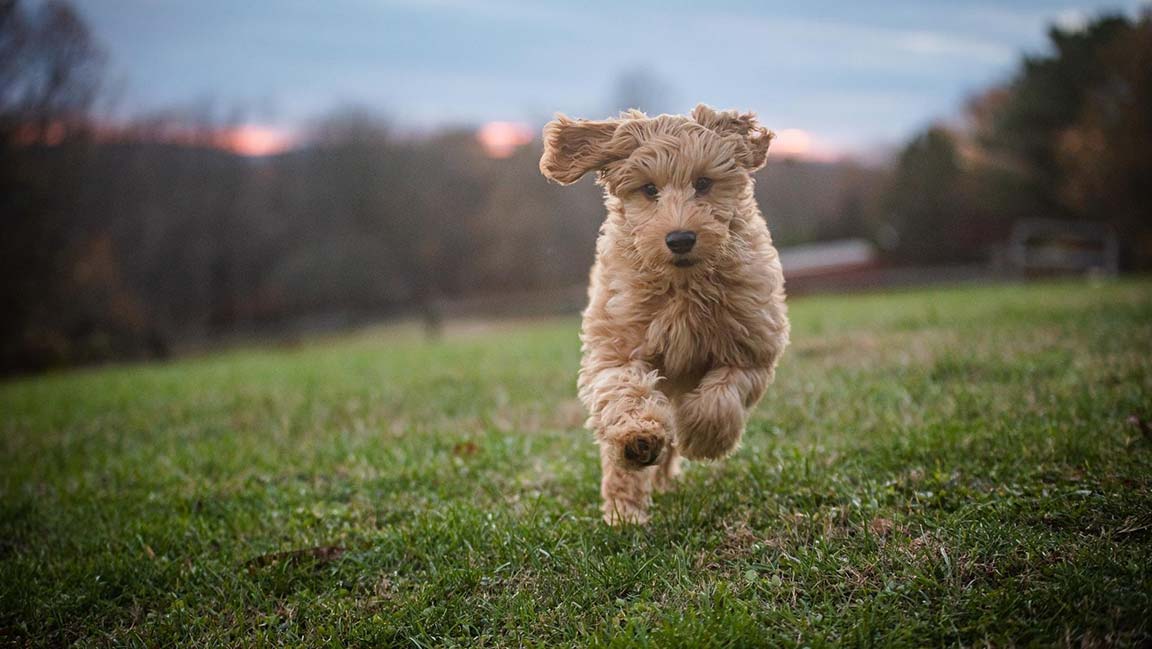
The zoomies are sudden, intense bursts of running and movement that seem to come out of nowhere. Your dog might run in tight circles, do figure eights, spin, leap, or zoom from room to room at full speed. These episodes usually last only a minute or two before your dog collapses, panting and satisfied, as though nothing happened.
Veterinary behaviorists use the term Frenetic Random Activity Periods, or FRAPs, to describe this behavior. The word “frenetic” is fitting because these bursts look almost frantic from the outside. But your dog is not panicking. They are playing, releasing, and celebrating.
What the Zoomies Look Like in Real Life
Here at Fox Creek Farm, we start seeing zoomies in our puppies very early. Around four to five weeks of age, when the pups begin venturing outside and testing their legs, you can already spot the beginnings of that wild energy. Their back legs seem to move faster than their front legs, they bump into their littermates, and they wear the biggest, most joyful expression you have ever seen.
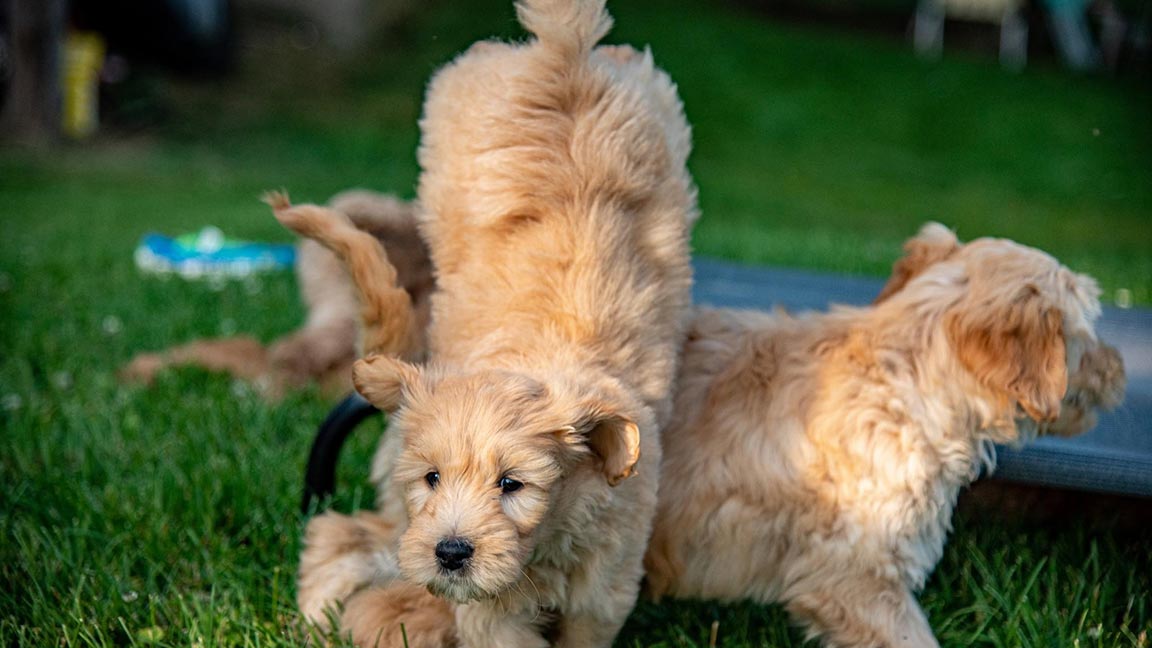
By the time our Goldendoodle and Bernedoodle puppies are seven weeks old, full-blown zoomies are a daily occurrence. They zoom across the grass, zoom back into the whelping area, and then flop over like they have just run a marathon. It is one of our very favorite parts of raising puppies, and honestly, after all these years, it still makes us stop whatever we are doing and just smile.
One thing we have noticed over the decades is that the zoomies tend to be most explosive in puppies who have been raised with enrichment and freedom to explore. When puppies have a stimulating environment, they build up more joyful energy and release it more dramatically. That tracks with everything we know about healthy emotional development in dogs.
Why Do Dogs Get the Zoomies?
The zoomies happen for several reasons, and all of them are rooted in your dog’s emotional and physical well-being. Understanding the trigger helps you anticipate the episode and enjoy it rather than worry about it.
Pent-Up Energy
This is the most common cause. Dogs are built to move. When they have been resting, sleeping, or staying still for a while, energy builds up in their bodies. The zoomies are the release valve. Think of it like a shaken soda bottle. When the cap finally comes off, the pressure has to go somewhere fast.
Puppies and young dogs are especially prone to this because their energy reserves are enormous. Adult dogs experience it too, particularly after naps, long car rides, or quiet mornings at home. We always tell new families: if your puppy has been napping for two hours, get ready. The zoomies are coming.
Post-Bath Zoomies
If you have ever bathed your dog and watched them explode into wild laps around the house the moment you wrap them in a towel, you have witnessed one of the most reliable zoomie triggers in existence. Post-bath zoomies happen for a few reasons:
- Relief that the bath is finally over
- The sensation of wet fur driving them to rub and roll
- A burst of adrenaline from the stimulation of being scrubbed and dried
- Pure celebration that they survived the ordeal
We always warn our new puppy families during their prep conversations with us: have a dry towel ready and maybe stand back. Better yet, take them straight outside after bath time if the weather allows. Watching a freshly washed puppy zoom through the grass is one of life’s great simple pleasures.
After a Big Poop
This one surprises a lot of people, but dogs frequently get the zoomies after relieving themselves. Researchers believe this may be linked to the vagus nerve, which runs through the colon. Stimulation of this nerve during defecation can trigger a rush of excitement in the nervous system. Add in the relief of feeling lighter, and your dog has every reason to celebrate with a victory lap.
We mention this to families when we talk about potty training, because new puppy owners sometimes think something is wrong when their puppy finishes in the yard and then immediately takes off sprinting. Nothing is wrong. That puppy is thriving.
When the Leash Comes Off
Freedom is a powerful motivator. The moment a leash is unclipped at the dog park or in a safe yard, many dogs launch immediately into zoomies. They are not running away from you. They are running because they can, and that freedom feels absolutely glorious to them.
Social Excitement
Sometimes zoomies are contagious. One dog starts zooming, and suddenly every dog in the yard is doing it. Dogs also get the zoomies when a favorite person arrives home, when another dog comes over to play, or when something wonderfully exciting happens. We have seen entire litters set each other off, where one puppy gets a wild look in their eyes and within seconds all eight siblings are spiraling around the yard together.

The Science Behind the Burst: What Is Happening in Your Dog’s Body?
When your dog zooms, their body is doing some genuinely fascinating things. The zoomies involve a surge of adrenaline, the release of feel-good neurochemicals, and the activation of the sympathetic nervous system, which is the part of the nervous system responsible for that classic fight or flight response. In this case, it is pure flight, but in the very best sense.
Dopamine floods the brain during play and excitement, and the physical act of running releases even more of it. Your dog is essentially getting a natural high from their own body chemistry. This is why the zoomies tend to end with a dog that is not just tired, but visibly calmer and more content. They have effectively self-regulated their emotional state through movement.
At Fox Creek Farm, we use Early Neurological Stimulation protocols from days three through sixteen of a puppy’s life. One of the documented benefits is improved cardiovascular performance and a stronger stress response system. We genuinely believe this early stimulation contributes to the well-regulated, emotionally resilient puppies we produce. And emotionally resilient puppies become dogs who express joy freely. Yes, that absolutely includes enthusiastic zoomies.
A Morning Zoom I Will Never Forget
I want to share a memory that has stayed with me for years. One spring morning at the farm, we had just let a litter of eight-week-old Goldendoodle puppies outside into the yard for the first time after several days of rain. The grass was still wet, the sun had just come out, and the smell of the earth was everywhere.
One puppy, a little apricot girl we called Sunny, stepped off the porch, sniffed the air, looked back at me with the biggest eyes, and then just took off. She ran in three enormous circles around the yard, ears flopping, tail spinning, completely overtaken by the joy of the moment. Within seconds, all seven of her littermates had joined her.
I stood there with my morning coffee and just watched. Eight puppies zooming in the morning light, bumping into each other, falling down, getting right back up, and doing it again. That is exactly why we do what we do. It is pure, unfiltered joy. It is the kind of thing you carry with you for the rest of your life.
Sunny went home to a family in Virginia a week later. Her new family called us that first evening to say she had already done her first solo zoom across their living room. We were not surprised at all.
Are the Zoomies Ever a Concern?
In most cases, the zoomies are completely harmless and even wonderful to witness. But there are a few situations worth knowing about.
When to Just Enjoy It

If your dog is healthy, the zoomies are fully normal. Enjoy the show. Laugh out loud. Your dog is happy. Grab your phone and film it, because you will want to watch it again later.
When to Pay Attention
Keep an eye on the zoomies if:
- Your dog seems distressed or scared rather than joyful during the episode
- The behavior happens with unusual frequency, and your dog cannot seem to calm down between bursts
- Your dog runs into furniture or walls and seems disoriented rather than playful
- Your senior dog suddenly starts zooming much more than usual, which could signal pain or a cognitive change
In the vast majority of cases, none of these apply. But we always encourage families to stay attuned to their dog’s overall behavioral patterns. You know your dog. Trust your instincts.
Zoomies and the Well-Raised Puppy
At Fox Creek Farm, we raise our puppies using the Puppy Culture program, which focuses on emotional resilience, problem-solving, and early socialization. One thing we consistently observe is that puppies raised with enrichment, structure, and positive experiences express joy more freely than those raised in more sterile or isolated environments.
That joy shows up in the zoomies. It shows up in the wagging tail and the happy bark and the way a well-raised puppy throws themselves into play without hesitation. We take that as a very good sign.
When families ask us what to expect in the first weeks with their new puppy, we always mention the zoomies. We tell them: when your puppy zooms, they are not misbehaving. They are thriving. That is exactly what we were aiming for from the very beginning.
Tips for New Puppy Owners: Embracing the Zoomie Phase
If you are bringing home a new puppy, here are a few practical things to keep in mind about the zoomies:
- Expect them daily. Puppies often zoom after waking up, eating, potty time, and play. This is very normal.
- Puppy-proof your space. Remove anything fragile or hazardous from areas where your puppy tends to run.
- Use the zoomies as training insight. A zooming puppy is a puppy with energy to burn. Channel that into a structured play session right after.
- Do not scold the behavior. Unless your puppy is putting themselves or someone in danger, let the zoomies happen. Scolding a dog for expressing joy is confusing and discouraging for them.
- Laugh. Genuinely. The zoomies are one of the funniest, most heartwarming things you will witness as a dog owner. Let yourself enjoy every single one.
FAQ: Your Zoomie Questions Answered
Why do dogs get the zoomies at night?
Evening zoomies are very common and are usually caused by a buildup of energy that was not fully released during the day. Dogs also tend to have natural energy peaks in the early morning and early evening. A calming walk or structured play session before bed can help reduce nighttime zoomies if they are disrupting your routine.
Are the zoomies a sign that my dog needs more exercise?
Not necessarily. Even well-exercised dogs get the zoomies. However, if your dog is zooming very frequently and seems restless overall, adding more structured activity to their day is a good idea. We always say: a tired dog is a happy dog, but a stimulated dog is an even happier one.
Do all dogs get the zoomies?
Most dogs do, yes. Some dogs zoom more than others based on breed, age, personality, and environment. High-energy breeds like Goldendoodles and Bernedoodles tend to be enthusiastic zoomers, especially as puppies. It is one of their most endearing qualities.
Can the zoomies hurt my dog?
In a safe, open space, the zoomies are almost always harmless. The main risk is collision with furniture, walls, or stairs. Making sure your dog has a clear path to run reduces this risk significantly.
My senior dog suddenly started getting the zoomies. Should I be concerned?
A sudden change in any behavior, including the zoomies, is worth mentioning to your vet. In senior dogs, new behavior patterns can sometimes be related to cognitive changes or discomfort. That said, many senior dogs zoom simply because they feel wonderful that day. Context matters. A dog who seems otherwise happy and well is probably just having a great morning.
How long do the zoomies usually last?
Most zoomie episodes last between thirty seconds and three minutes. If your dog seems to be in an extended, frantic state for much longer than that and cannot calm down, it is worth a conversation with your vet.
Do puppies grow out of the zoomies?
They do tend to mellow as dogs mature, but most dogs never fully stop zooming. Adult and senior dogs zoom, too, just usually with a bit more dignity and a little less chaos. We hope your dog zooms for their entire life. It means they are happy.
At Fox Creek Farm, we have been watching dogs express joy since 1999, and the zoomies remain one of our absolute favorite parts of canine life. Whether your dog is an eight-week-old puppy meeting the backyard for the first time or a seven-year-old Goldendoodle celebrating a sunny afternoon, those wild laps are a gift. They are proof that your dog is healthy, happy, and fully alive.