


The Importance of Playtime for Your Dog’s Mental Health
Playtime for your dog is not just about burning off energy. It plays a direct role in your dog’s mental health, shaping how they think, learn, and respond to the world around them. A well-played dog is usually a calmer, more confident, and more connected companion.
At Fox Creek Farm, we see this every day. Our puppies are not just physically active; they are mentally engaged. And there is a big difference between the two.

Why Playtime Matters More Than You Think
Most people focus on exercise, which is important, but mental stimulation is what truly balances a dog.
Playtime for your dog gives them a chance to:
- Solve small problems
- Practice social skills
- Release stress in a healthy way
- Build confidence in new situations
Without that outlet, energy does not just disappear. It shows up somewhere else, usually in ways you do not want, like chewing, barking, or restlessness.
This is where a dog’s mental health comes into play. Dogs need an active mind just as much as an active body.
What Happens When Dogs Don’t Get Enough Play
When play is missing, dogs do not just get bored. They get frustrated.
We have seen it plenty of times. A dog that seems “hyper” or “difficult” is often just under-stimulated.
Signs your dog may need more playtime for your dog include:
- Constant pacing or inability to settle
- Chewing things they should not
- Excessive barking
- Lack of interest in training
- Seeming anxious or overly reactive
These are not bad behaviors. They are unmet needs.
Supporting your dog’s mental health often starts with something as simple as better play routines.
Not All Play Is Equal
Here is where things get interesting.
Throwing a ball over and over is great physical exercise, but it does not always challenge the brain. For true dog’s mental health benefits, play should include variety.
We like to think of play in three categories:

Problem-Solving Play
- Puzzle toys
- Hide-and-seek with treats
- Snuffle mats
These activities engage your dog’s brain and encourage focus.
Interactive Play
- Tug-of-war
- Training games
- Fetch with added commands
This type of playtime for your dog strengthens your bond while keeping their mind active.
Exploratory Play
- Walks in new environments
- Safe off-leash sniff time
- Backyard “adventures”
Letting your dog explore taps into their natural instincts and supports long-term dog mental health.
Play Builds Confidence
One of the biggest benefits we see from consistent playtime for your dog is confidence.
At Fox Creek Farm, our puppies are introduced to new textures, sounds, and play experiences early on. That exposure helps them grow into dogs that are:
- More adaptable
- Less fearful in new environments
- Easier to train
A dog that feels confident is a dog that can handle life better. That is a huge part of maintaining strong mental health in a dog.
Turning Everyday Moments Into Play
You do not need a full schedule or special equipment to improve your dog’s routine.
Some of the best playtime for your dog happens in simple, everyday moments:
- Turning mealtime into a game by scattering kibble
- Asking for a quick “sit” or “down” before throwing a toy
- Letting your dog sniff and explore on walks instead of rushing
These small changes turn routine into enrichment, and enrichment directly supports your dog’s mental health.

Knowing When Your Dog Has Had Enough
Here is something people overlook. Good play is not endless play.
A healthy play session should leave your dog:
- Relaxed, not overstimulated
- Tired, but not exhausted
- Calm afterward
If your dog becomes more hyper after play, it may be a sign they need more structured or mentally engaging activities instead.
Balance is key to both your dog’s playtime and overall well-being.
A Breeder’s Perspective on Play
At Fox Creek Farm, we do not treat play as an afterthought. It is part of how we raise well-rounded puppies.
From an early age, our puppies experience:
- Gentle problem-solving games
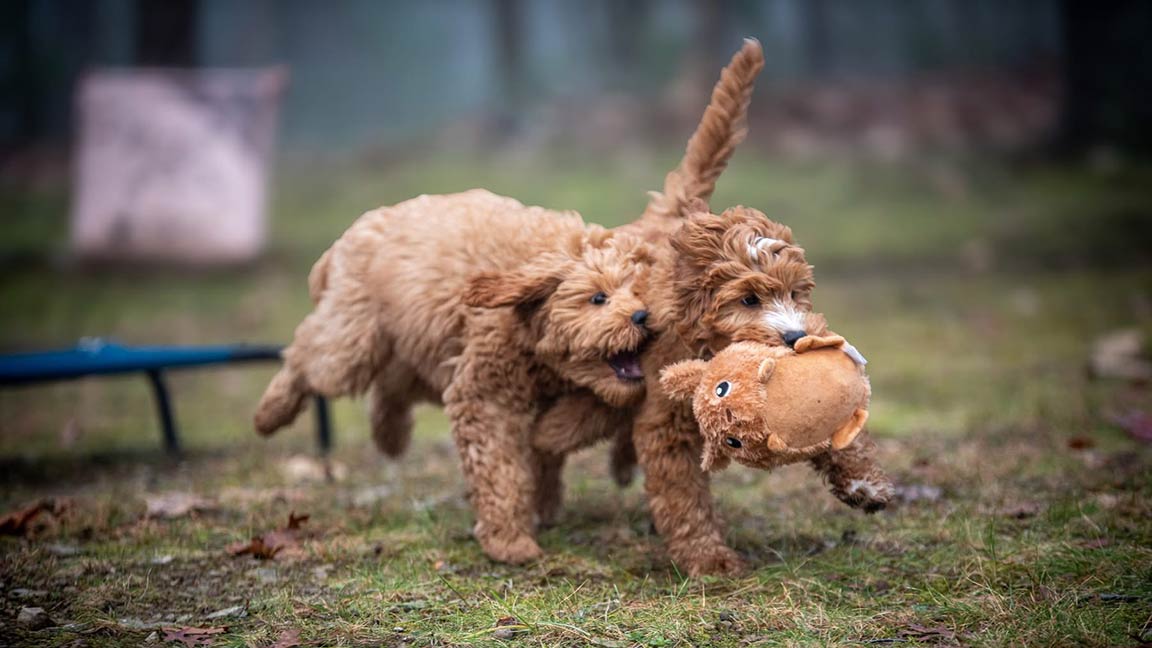
- Social play with littermates
- Exposure to different environments and textures
This early focus on play helps create dogs that are not just physically healthy, but mentally prepared for family life.
When families bring one of our puppies home, they often notice how quickly their dog adapts. That is not by accident. It starts with intentional playtime for your dog from the very beginning.
Final Thoughts
Playtime for your dog is one of the simplest and most powerful ways to support your dog’s mental health.
It is not about doing more. It is about doing it better.
A few thoughtful, engaging play sessions each day can lead to a calmer, happier, and more confident dog. And in our experience, those are the dogs that fit seamlessly into family life.
FAQ
How much playtime does a dog need each day?
Most dogs benefit from at least 30 to 60 minutes of play each day, depending on age, breed, and energy level.
Why is playtime important for a dog’s mental health?
Play helps reduce stress, builds confidence, and keeps your dog mentally stimulated and engaged.
What are the best types of play for dogs?
A mix of problem-solving, interactive, and exploratory play provides the best mental and physical balance.
Can playtime reduce bad behavior?
Yes. Many unwanted behaviors come from boredom or a lack of stimulation. Proper play can help prevent this.
Is mental stimulation as important as physical exercise?
Yes. Mental stimulation is a key part of your dog’s overall health and helps create a balanced, well-behaved companion.