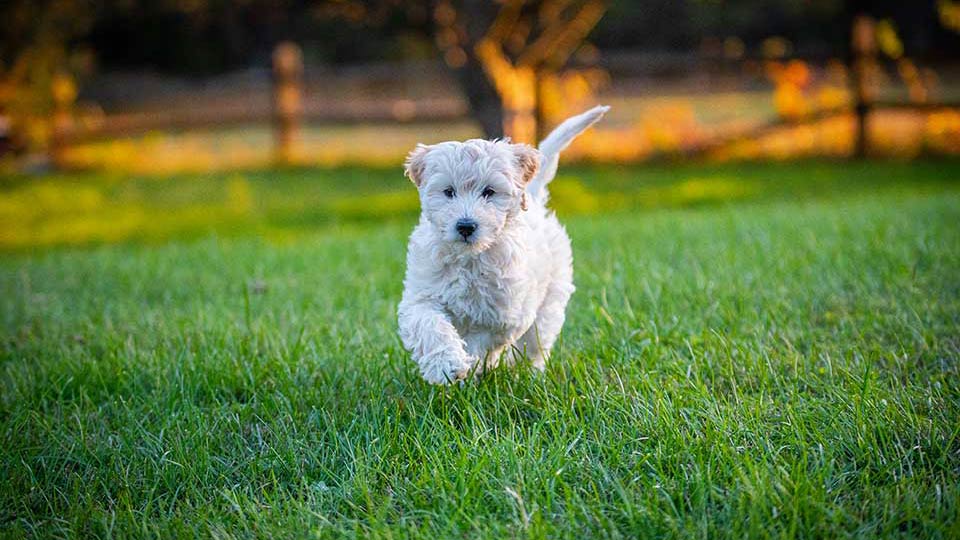
Petite Goldendoodle: Size, Temperament and What to Expect
A petite Goldendoodle is the smallest official size of Goldendoodle, with all the warmth of a Golden Retriever and the clever, low-shedding coat of a Poodle in a dog that fits easily on your lap. I’m Amy Lane of Fox Creek Farm in Berkeley Springs, West Virginia. I’ve been breeding Goldendoodles since 1999, I created the mini Goldendoodle, and I helped found the Goldendoodle Association of North America (GANA). In this guide, I’ll explain exactly what “petite” means, how big a petite gets, what they’re like to live with, and how to find a healthy one.
What is a petite Goldendoodle?
“Petite” is a size category, not a separate breed. When we set up GANA, we created clear size ranges so families and breeders would finally be speaking the same language. The Goldendoodle Association of North America defines a petite as a Goldendoodle under 14 inches at the shoulder, typically weighing 25 pounds or less.
To get a dog this small, the Poodle side of the pedigree has to be small too. A Toy Poodle stands 10 inches or under, and a Miniature Poodle stands over 10 and up to 15 inches. Over many generations, I’ve carefully brought those smaller Poodle genetics into my lines while keeping the Goldendoodle temperament families love.

Petite vs. micro mini vs. toy vs. teacup
You’ll see a lot of names for small Goldendoodles online, and it gets confusing fast. Here’s how they fit together:
- Petite is the official GANA size class, under 14 inches and typically 25 pounds or less.
- Micro mini is a popular name for dogs in the petite range. I explain how I developed them in my guide to Micro Mini Goldendoodles.
- Toy Goldendoodle is another informal name for a petite, borrowed from the Toy Poodle.
- Teacup is an informal name for the very smallest Goldendoodles, typically under 15 pounds. You can learn more about them in my post on teacup Goldendoodles.
If a breeder uses one of these informal names, ask for the expected adult height and weight. Those numbers tell you far more than the label.
How big does a petite Goldendoodle get?
A petite Goldendoodle, full grown, stands under 14 inches at the shoulder and typically weighs 25 pounds or less. Here’s how petites compare with the other GANA sizes:
Small dogs finish growing sooner than big ones. Dogs in the 12 to 24 pound range usually stop growing between 9 and 12 months. Most petites look nearly grown by about 8 months, then fill out a little more before their first birthday.
The best predictor of your puppy’s adult size is the size of the parents. For example, my upcoming petite litter is from Cocoa, who weighs 24 pounds, and Blaze, who weighs 15 pounds, and I expect the puppies to mature under 25 pounds. You’ll find all of my size categories explained in what are the different Goldendoodle sizes, and if you’re deciding between a petite and the next size up, see my guide to the full grown mini Goldendoodle.
Temperament: what petites are like
A well-bred petite has the same big heart as a standard Goldendoodle. In my experience, petites are:
- Affectionate and people-focused, happiest right next to you
- Smart and eager to please, which makes training a joy
- Playful, but able to settle down for a nap on the couch
- Friendly with visitors, other dogs, and gentle children
- Adaptable to apartments, condos, and busy households
Because they bond so closely with their people, petites don’t love long stretches alone. Building short, positive alone time into their routine from the start makes a big difference.
Is a petite right for your family?
Petites are a wonderful fit for:
- Apartment and city living
- Retirees and empty nesters who want a lap-sized companion
- Families with older children who can handle a small dog gently
- People who travel and want a dog that’s easy to bring along
A few things to think about first:
- Small bodies can be hurt by rough play, falls, or jumps from high furniture, so supervise young children closely.
- Petites still need daily walks, play, and training. Small doesn’t mean low energy.
- Their coat needs regular brushing and professional grooming, just like any doodle.
Health and lifespan
Small dogs often live long lives, and many petites live well into their teens with good care. Like all small breeds, though, they have a few health concerns to watch for.
Patellas
Patellar luxation, a kneecap that slips out of place, is common in small breeds. The Orthopedic Foundation for Animals considers it an inherited condition in toy and miniature breeds, which is why every one of my breeding dogs has OFA patella clearances.
Teeth
Small dogs are especially prone to dental disease. A large veterinary study of dental disease found that dogs under 10 kilograms (about 22 pounds) had about three times the risk of dental disease of dogs weighing 30 to 40 kilograms. Brushing your petite’s teeth a few times a week makes a real difference, and my post on dog dental care shows you how to make it stress-free. Another option is a simple Plaque Control chew that works systemically in the blood stream to make plaque unable to attach to the teeth. This eliminates the need for brushing teeth.
Full health testing
Before I breed any dog, it completes PennHip and/or OFA hip certifications, OFA elbows, heart, patellas, and eyes certifications, plus DNA testing for diseases common in Goldendoodles. You can see the full list on my health testing page.

Coat and grooming
My petites are multigenerational Goldendoodles, bred for low-shedding or non-shedding coats. Shedding is strongly linked to a gene called RSPO2, which controls “furnishings,” the beard and eyebrows that give a doodle its teddy-bear face. Dogs with furnishings tend to be lighter shedders. I DNA test for furnishings and choose pairings to produce the most allergy-friendly coats possible, which is why I only breed multigens. You can read more in my post on why multigen Goldendoodles are the most popular generation.
For grooming, plan to:
- Brush a few times a week, down to the skin, to prevent mats
- Book a professional groom every 6 to 8 weeks
- Trim nails every few weeks and keep the hair around the eyes tidy
How my petite puppies are raised
Every puppy at Fox Creek Farm is raised with Puppy Culture and Early Neurological Stimulation. My puppies:
- Learn to use a doggie door at 4 weeks and are going potty outside by 5 weeks
- Get a positive introduction to the crate starting at 4 weeks
- Start learning “sit” at 6 weeks
- Go home at 8 weeks with their first vaccines, deworming, a vet check and a microchip
I match each puppy to a family based on size and temperament, so your petite fits your lifestyle, not just your wish list.
How much does a petite Goldendoodle cost?
All of my puppies are $4,000, regardless of size, color or gender. That includes copies of both parents’ pedigrees and health certifications, a 2 to 4 year genetic defect warranty, 30 days of complimentary insurance through Trupanion and lifetime support. You’ll find the details on my pricing page.
Frequently asked questions
How big is a petite Goldendoodle full grown?
Under 14 inches at the shoulder and typically 25 pounds or less, based on GANA’s size categories. Parent size is the best predictor.
What is the difference between a petite and a mini Goldendoodle?
Size. Petites are under 14 inches and usually 25 pounds or less. Minis stand 14 to 17 inches and typically weigh 26 to 35 pounds.
Is a petite Goldendoodle the same as a toy Goldendoodle?
Usually, yes. “Toy” and “micro mini” are informal names for dogs in the petite range. Always ask for the expected adult height and weight.
Do petites shed?
Multigenerational petites with two copies of the furnishings gene are typically low to non-shedding. Ask your breeder for coat DNA results.
Are petites good with kids?
Yes, they’re gentle and loving. Because they’re small, they do best with children old enough to handle a puppy calmly.
How long do petites live?
Smaller dogs tend to live longer, and many petites reach 14 years or more with health-tested parents and good care.
Find your petite Goldendoodle
A petite Goldendoodle gives you everything I love about this breed in the smallest, most portable size. If you want a smart, affectionate companion who fits easily into apartment life, travel or retirement, a petite may be your perfect match. My next petite litter is planned from Cocoa and Blaze, with red, golden, blonde and chocolate puppies expected to go home in the spring, and I’m accepting applications now.